



Interruption vs Integration: Commercial breaks vs In-game advertising- What works in modern sports?
By: Smruthi Karthik
Introduction
A decade ago, watching a match meant settling in front of the TV, fully immersed from kick-off to the final whistle, with breaks that were as much a part of the viewing experience as the match itself. Viewers stayed tuned, halftime ads were anticipated and brands could rely on dedicated windows of attention. Today, that assumption no longer holds. During halftime or other breaks, fans switch tabs, scroll through their phones or shift their attention elsewhere as soon as play stops.
Despite the shift in viewing behavior, live sports continue to hold exceptional value for brands because they still command real-time attention compared to other forms of entertainment.
Live matches create moments that viewers want to experience as they happen such as goals, wickets and turning points of the game that keep them engaged. This means that audiences of sports are more likely to stay connected to the broadcast, even if their attention fluctuates. For brands, this makes live sports one of the last reliable spaces to achieve scale, visibility and cultural relevance all at once.
However, this value comes with a key challenge. Attention in live sports cannot be captured by disrupting the experience itself. Research commissioned by Google reveals that nearly 90% of viewers are actively using a second screen while watching live sports. The moment the whistle blows and a commercial break begins, the audience isn’t sitting through the interruption; their attention immediately migrates downward to their smartphones. Today’s audiences are less tolerant of interruptions, making it harder for brands to rely on traditional methods. The focus of brands is no longer about being seen, but on being present in a way that feels natural within the game. This is where the balance between interruption and integration becomes critical for brands.
Commercial breaks: The traditional backbone of sports advertising
Commercial breaks have long been a core revenue driver in sports broadcasting, offering brands structured, high-visibility slots within the live viewing experience. Built around natural stoppages, they provide a controlled space for polished, narrative-driven campaigns without competing with on-field action. For broadcasters, they ensure predictable monetization, while for brands, they promise uninterrupted exposure at scale, making them a key pillar of the traditional sports media ecosystem.
In-Game advertising: Seamless brand integration within live sport
In contrast, in-game advertising operates within the flow of the sport itself, embedding brand visibility directly into the live viewing experience. From pitch-side LED boards and jersey sponsorships to on-screen graphics and virtual overlays, this model ensures continuous exposure without interrupting play. In-game ads offer sustained visibility, remaining present throughout key moments of the match, and over time, this repeated presence helps build familiarity and brand recall. Its strength lies in its alignment with the viewing experience, with ads appearing during moments of peak attention, including key highlights, and often remaining visible in replays that fans watch multiple times during and after the match, including on social media.
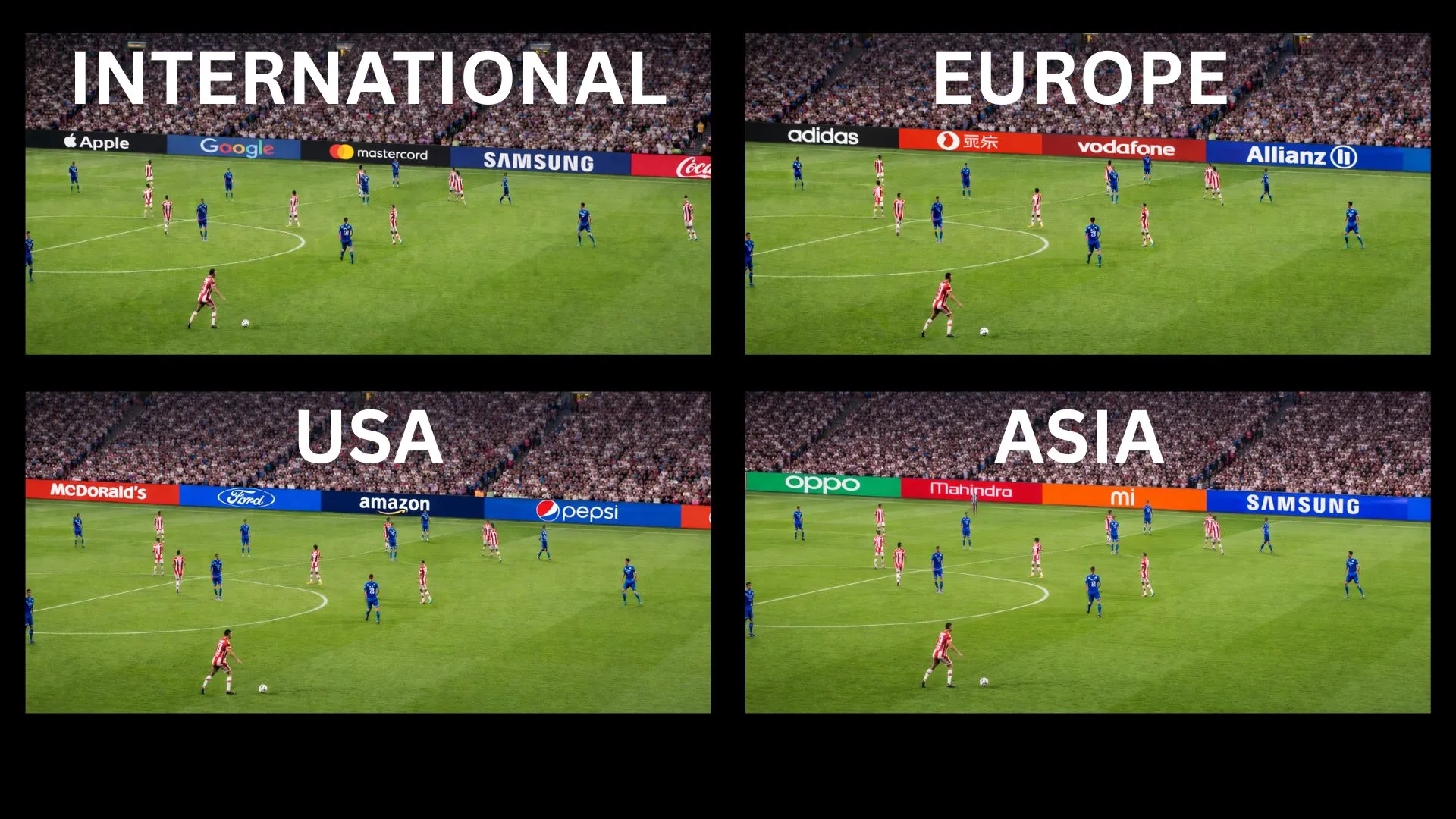
The evolution of virtual advertising has further expanded this capability, enabling dynamic, real-time ad placements that can be updated, customized and optimized to run multiple campaigns within the same match. This significantly increases the value of brands while allowing broadcasters and rights holders to unlock new revenue opportunities. As sports consumption becomes more fragmented, in-game and virtual advertising represent a shift toward integration-driven strategies that prioritize presence, relevance and viewer experience.
A comparative analysis of commercial breaks vs In-Game advertising
To understand what truly works in modern sports advertising, it is essential to compare commercial breaks and in-game advertising across five key dimensions.
Attention
Commercial breaks are designed to capture full viewer focus, but in practice, they often occur at moments when audiences are most likely to disengage. In contrast, in-game advertising benefits from being embedded within live action. While it may not command undivided attention, it consistently remains within the viewer’s field of view, making it harder to ignore.
Engagement
Commercials are standalone content, separate from the match, requiring viewers to shift their focus away from the game. In-game ads, however, exist within the context of the action. They are seen while viewers are emotionally invested, which increases their relevance and makes them feel less intrusive.
Brand Recall
When it comes to brand recall, the difference lies in intensity versus repetition. Commercial breaks offer short, concentrated bursts of messaging designed to leave a strong impression. In-game advertising, on the other hand, relies on continuous exposure. Over time, this repeated presence within meaningful moments of the match helps reinforce familiarity and recall in a more sustained manner.
Viewer Experience
Viewer experience is perhaps the most critical factor. Commercial breaks interrupt the flow of the game, which can disrupt momentum and reduce satisfaction. In-game advertising preserves the continuity of the match, allowing brands to remain visible without affecting how the game is experienced. In an environment where fan experience is increasingly prioritized, this distinction becomes highly significant.
Cost efficiency
Commercial breaks are high-cost and limited to short time slots, with impact depending on viewer attention. In contrast, in-game advertising offers continuous exposure throughout the match, delivering repeated visibility across key moments. With virtual advertising, this becomes even more efficient, enabling multiple campaigns and better value from the same inventory.
Comparison summary
| Parameter | Commercial Breaks Advertising | In-Game Advertising |
| Attention | High intent, but often lost during breaks | Lower intensity, but consistently present |
| Engagement | Passive, separate from the match | Contextual, seen during live action |
| Brand Recall | Short bursts, high impact | Repetitive exposure,familiarity over time |
| Viewer Experience | Disrupts flow of the game | Seamless, does not interrupt viewing |
| Cost Efficiency | High cost for limited, time-bound exposure | Continuous exposure with better long-term value |
Shifting Trends in Sports Advertising in Broadcast Media
The sports broadcasting landscape is undergoing a fundamental shift from traditional television to streaming platforms, moving away from one-size-fits-all advertising toward more targeted and data-driven models. With global audiences accessing the same match across different regions, brands can no longer rely on uniform messaging. Instead, they demand relevance, seamless delivery, and measurable impact. This shift has created a need for more adaptive advertising solutions where formats like virtual overlays enable localized messaging, smarter in-game placements and more precise tracking of exposure and ROI.
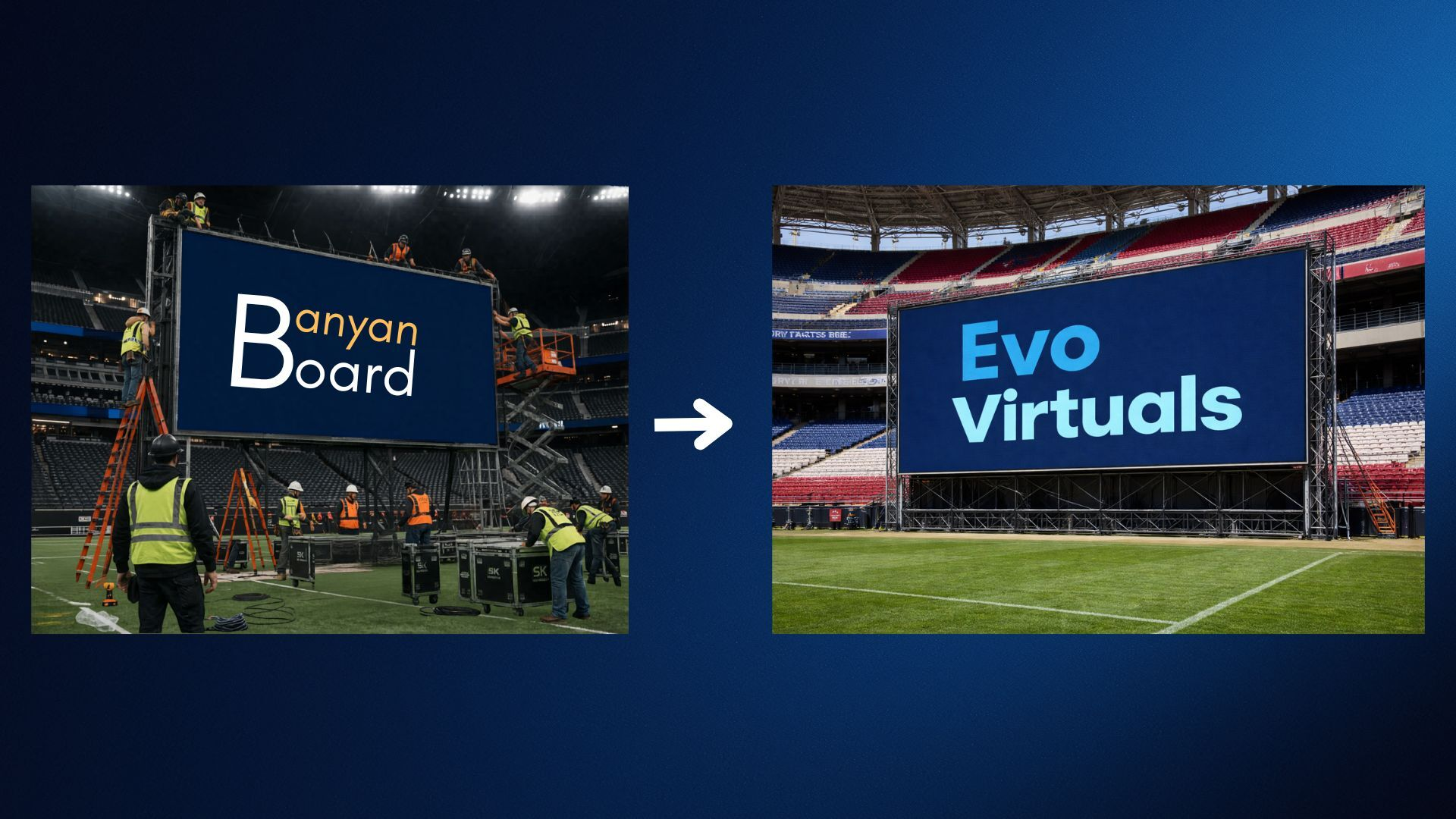
Evo Virtuals: Powering Seamless In-Game Advertising
Evo Virtuals enables seamless, non-intrusive in-game advertising within live sports broadcasts through virtual ads integrated directly into the feed. This allows brands to use the same inventory, run parallel campaigns and tailor messaging in real time. Evo Virtuals helps to create a scalable advertising ecosystem that benefits brands, broadcasters and audiences without disrupting fan experience.